

Understanding MiCA:
EU Digital Asset Regulation
An Introduction to MiCA and Its Application to Tokenized Real Estate
What Is MiCA?
The Markets in Crypto-Assets Regulation (MiCA), Regulation (EU) 2023/1114, establishes a harmonized regulatory framework for certain crypto-assets and crypto-asset services across the European Union.
Its objectives include strengthening transparency, market integrity, protection of crypto-asset holders and clients, and responsible innovation.
For real estate tokenization, understanding the legal rights represented by a token is essential. Depending on its classification, the token may fall under MiCA, MiFID II, or other applicable EU regulatory requirements.
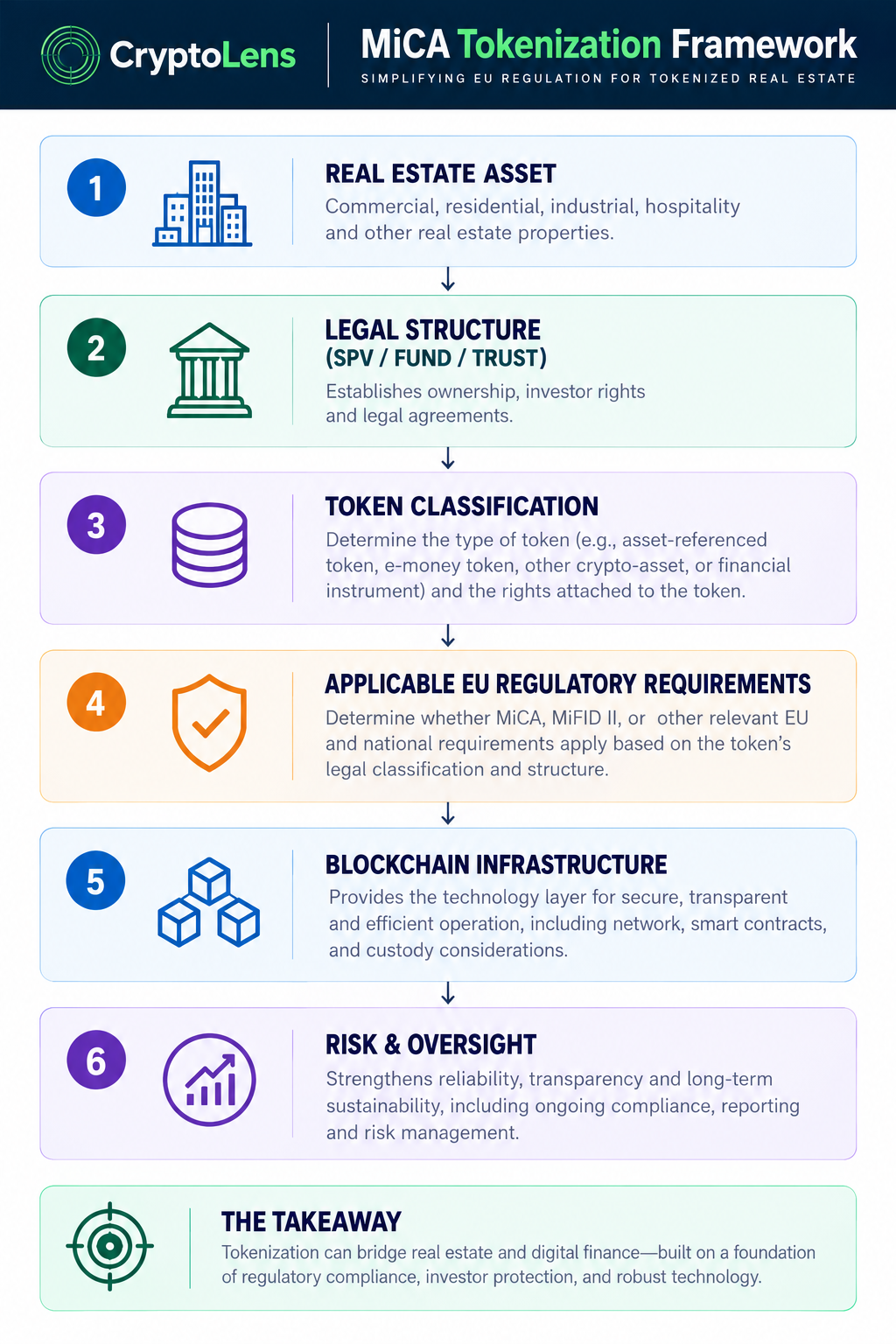
Understanding the Six Stages
The following six-stage framework illustrates key considerations when evaluating a tokenized real estate arrangement. It is an educational assessment approach rather than a regulatory sequence prescribed by MiCA.
Real Estate Asset
Identify the underlying property, such as residential, commercial, or industrial real estate. Establish ownership, valuation, and the rights or economic interests being tokenized.
Legal Structure (SPV / Fund / Trust)
Examine how the property is legally held and how the structure defines ownership, investor rights, contractual obligations, and the relationship between the asset and its tokens.
Token Classification
Determine what the token represents, including ownership interests, economic rights, or other entitlements. Classification helps establish which regulatory framework applies.
MiCA Compliance Requirements
Where MiCA applies, review relevant disclosure, transparency, authorization, and protection requirements. Tokens qualifying as financial instruments generally fall outside MiCA and require assessment under applicable securities legislation.
Blockchain Infrastructure
Evaluate the technology supporting token issuance, ownership records, transfers, and custody. Consider smart contracts, cybersecurity, access controls, and operational resilience.
Risk & Audit Oversight
Examine governance, regulatory compliance, operational risks, investor safeguards, and ongoing oversight. Consider audit trails, reporting, monitoring, and the effectiveness of controls.
Official Regulatory References
Access the official EU regulation and supervisory guidance to support further research and regulatory assessments.
Markets in Crypto-Assets Regulation (MiCA)
Regulation (EU) 2023/1114, published through the official EUR-Lex legislative portal.
View Official MiCA Regulation →ESMA Guidelines on Crypto-Asset Classification
Guidance on conditions and criteria for determining whether crypto-assets qualify as financial instruments.
View ESMA Guidelines →Educational Notice: This framework is an educational resource developed by CryptoLens. It is not an official MiCA framework or a substitute for legal advice. Regulatory applicability depends on the structure, rights, and activities involved.