


Auditing the Chain
Digital Asset AML Audit — Coverage and Lifecycle Summarized in 7 Phases
Digital asset activity is changing the evidence, systems, and transactions that anti-money laundering (AML) auditors need to understand. The core audit disciplines remain grounded in risk assessment, customer due diligence, sanctions compliance, transaction monitoring, investigation, and reporting. Digital assets add blockchain networks, wallet activity, digital-asset intermediaries, and new methods of transferring value.
Digital Asset AML Audit Coverage: Beyond Traditional Compliance Controls
The ten core areas illustrated below provide a starting point for defining the scope of a digital asset Anti-Money Laundering (AML) audit. In addition to traditional compliance requirements, these areas address digital asset-specific activities involving blockchain transactions, digital wallets, decentralized platforms, on-chain and off-chain monitoring, and third-party relationships.
The scope and depth of coverage should reflect the organization's business model, regulatory obligations, and risk profile.
Auditors may assess whether an institution can identify and risk-assess transactions involving self-hosted wallets, trace the movement of funds across multiple blockchain networks, and detect exposure to high-risk activities involving mixers, cross-chain bridges, decentralized exchanges, or other decentralized finance (DeFi) protocols.
Auditors should also consider whether blockchain analytics and transaction monitoring tools provide sufficient coverage of supported digital assets and networks, whether on-chain activity can be reconciled with internal customer and transaction records, and whether suspicious activity is appropriately identified, investigated, escalated, and reported.
Ten Core Areas of Digital Asset AML Audit Coverage
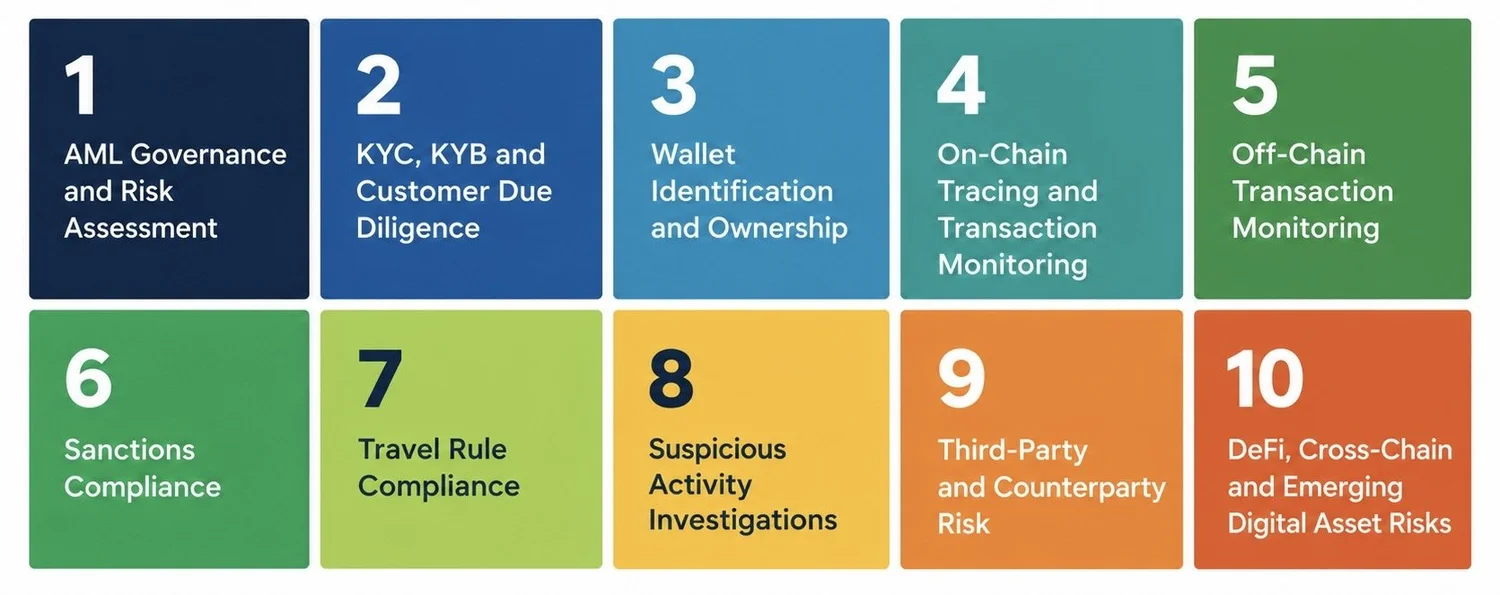
Once the audit coverage has been defined, the next step is determining how to execute the audit. The following seven-phase digital asset AML audit lifecycle provides a practical approach, from planning and preparation through fieldwork, reporting, follow-up, and closure.
Digital Asset AML Audit Lifecycle: Seven Phases
Auditors are part of the process to add value and not to point fingers. A constructive audit evaluates the risks identified, the controls intended to mitigate those risks, the evidence of their effectiveness, and any remaining exposures. Clear expectations and communication throughout the lifecycle help support factual observations and practical remediation.
Planning
Define audit objectives and scope. Understand the organization's business model, digital asset products and services, customer and transaction flows, supported blockchain networks, applicable regulatory requirements, and prior risk or audit issues. Establish a risk-based approach, resource needs, stakeholders, and initial audit timeline.
Preparation
Gather and review policies, risk assessments, transaction data, system documentation, vendor information, prior findings, and other relevant evidence. Develop audit procedures and test scripts. Confirm access to systems, records, blockchain analytics tools, and the individuals needed for walkthroughs.
Fieldwork
Perform walkthroughs, control design assessments, and operating-effectiveness testing. Examine customer due diligence, wallet-related controls, sanctions processes, transaction monitoring, suspicious activity investigations, and third-party oversight within the approved scope. Use reliable, independently corroborated evidence where available.
Analysis
Evaluate the testing results and determine whether exceptions indicate a control gap, a documentation issue, an isolated event, or a broader weakness. Consider root cause, potential regulatory impact, likelihood and severity, and whether existing mitigating controls reduce the exposure. Validate facts before assigning final conclusions.
Reporting
Document findings and observations clearly. Explain the condition, applicable criteria, risk, evidence, root cause when established, and recommended corrective action. Provide risk ratings supported by the organization's methodology. Prepare an objective report for the appropriate management and oversight bodies.
Feedback
Discuss findings with management, confirm factual accuracy, obtain responses, and evaluate proposed action plans. Clarify ownership, target dates, and the evidence needed to demonstrate remediation. Maintain a constructive process while preserving the auditor's independence and judgment.
Follow-Up and Closure
Track corrective actions and verify whether implemented changes address the underlying issue. Where required, test the operating effectiveness of remediated controls. Close findings only in accordance with the organization's audit methodology, retain supporting records, and document lessons learned for future coverage.
From Audit Findings to Stronger Controls
A digital asset AML audit should provide management with a clear view of the risks, how existing controls address those risks, and where additional attention is required. The most useful outcomes are supported by evidence, appropriate risk ratings, practical corrective actions, and accountability for implementation.
The lifecycle also supports a consistent audit approach while allowing each engagement to be tailored to the organization's business model, regulatory obligations, and exposure to evolving digital asset activity.